
Ester Expósito: Una de las actrices más populares de la nueva generación española
Ester Expósito es una actriz española reconocida internacionalmente por su trabajo en cine y televisión.
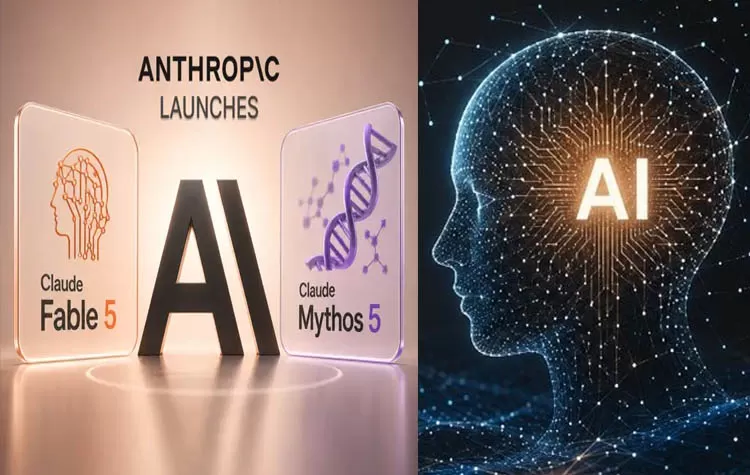
Artificial intelligence has become one of the most strategically important technologies in the world. As AI systems grow more powerful, governments, technology companies, and security experts are increasingly debating how these tools should be regulated.
That debate moved into the spotlight when the U.S. government ordered Anthropic to suspend access to its newest Claude AI models, a decision that surprised many observers across the technology industry.
Anthropic recently introduced two of its most advanced AI systems, Claude Fable 5 and Claude Mythos 5. Shortly after their release, U.S. authorities issued a directive requiring the company to restrict access to the models because of national security concerns. Anthropic subsequently disabled access to the models while reviewing the situation.
According to public reports, government officials were concerned that certain safeguards built into the models could potentially be bypassed, allowing users to identify software vulnerabilities or perform advanced cybersecurity-related tasks beyond intended limits.
Modern AI systems are capable of performing increasingly sophisticated tasks, including software development, code analysis, research assistance, and automation.
Government officials reportedly became concerned that the latest Claude models possessed capabilities that could be misused if proper protections were circumvented. The primary issue was not ordinary consumer usage but the possibility that bad actors could exploit the models for offensive cyber activities.
While Anthropic stated that the identified issues were limited and that extensive safety testing had already been conducted, regulators took a more cautious approach.
The incident highlights a broader trend: governments are becoming more actively involved in overseeing frontier AI systems.
Over the past several years, policymakers around the world have expressed concerns about:
As AI capabilities continue to improve, regulators are increasingly evaluating whether some models require additional oversight before broad public deployment.
The decision sparked significant debate within the technology community.
Some cybersecurity professionals argued that restricting access could unintentionally disadvantage defenders who rely on advanced AI tools to identify and fix vulnerabilities. Others supported the government’s precautionary approach, emphasizing that powerful technologies should be carefully evaluated before widespread release.
Industry analysts also noted that the move could accelerate investment in alternative AI ecosystems, including domestic and regional AI initiatives outside the United States.
The Anthropic case may become an important milestone in the evolution of AI governance.
For technology companies, it demonstrates that developing powerful models is no longer solely a technical challenge. Regulatory compliance, security testing, and government oversight are becoming equally important parts of the development process.
For policymakers, the situation raises difficult questions about how to balance innovation with security. Restricting advanced technologies may reduce certain risks, but it can also slow research and limit access for legitimate users.
As AI continues to advance, similar debates are likely to become more common.
The shutdown of Anthropic’s latest Claude models was driven primarily by concerns about national security and the potential misuse of advanced AI capabilities. While opinions differ on whether the government’s response was justified, the event underscores a larger reality: AI is increasingly being treated as a strategic technology with implications far beyond the technology sector itself.
The outcome of this dispute may help shape how governments and AI developers interact in the years ahead, influencing the future rules that govern some of the world’s most powerful digital systems.
Ester Expósito es una actriz española reconocida internacionalmente por su trabajo en cine y televisión.
Fernando Alonso es un piloto español de Fórmula 1 considerado como uno de los mejores
Pedro Sánchez es un político español que ejerce como presidente del Gobierno desde 2018 y
Disclaimer
Last Updated: February 2024
1. Educational Purpose Only
All information, courses, and resources provided by Ccpdigitalmedia (“we,” “us,” or “our”) on this website are for educational and informational purposes only. While we strive to deliver high‑quality, practical training in web design and internet marketing, we make no guarantees, representations, or warranties that any specific skill, income level, or business outcome will be achieved.
2. No Guarantee of Results
Our course statistics (including “Students Enrolled,” “Courses Completed,” “Happy Clients,” and “Successful Projects”) represent historical data and user‑reported metrics. They are not a guarantee, promise, or prediction of your own success. Individual results vary based on effort, prior knowledge, market conditions, and countless other factors.
3. Testimonials & Case Studies
Testimonials displayed on this site are from real students and clients. However, they are individual experiences and may not reflect the typical user’s results. We do not claim that every learner will achieve the same outcomes.
4. Professional Advice
The content on this website is not a substitute for professional legal, financial, or business advice. You should consult a qualified professional before making any business or investment decisions.
5. Third‑Party Links
Our site may contain links to third‑party websites or services. We are not responsible for the content, accuracy, or practices of those sites.
6. Company Information
Ccpdigitalmedia is operated by [Insert Legal Company Name, e.g., CCP Digital Media LLC / SL] .
For any inquiries, please contact us at: